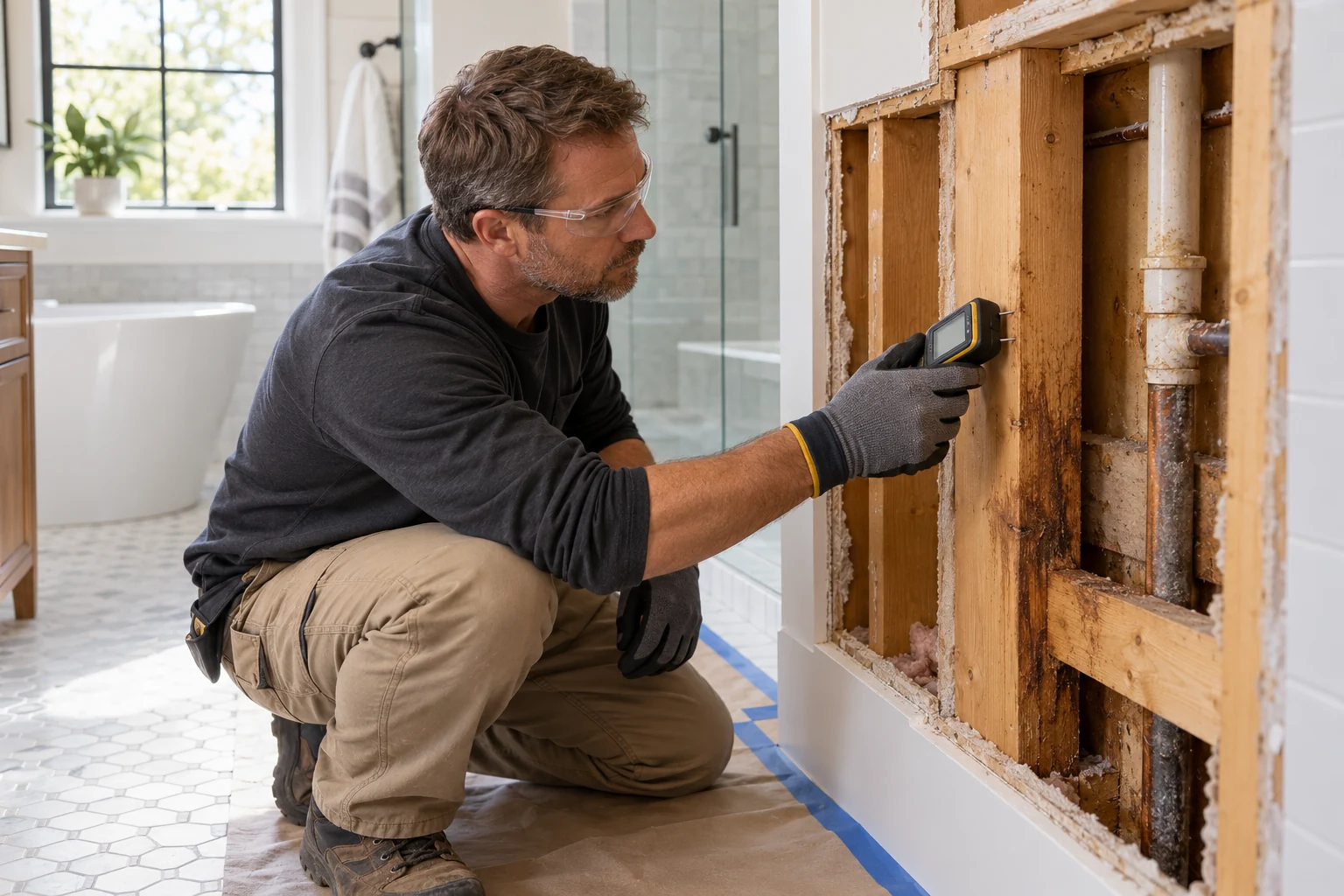
A bathroom remodel often starts with visible changes: new tile, a better vanity, or a shower that feels more comfortable. Yet the most important work may happen behind those finishes. This illustrative scenario explores how a seemingly straightforward refresh can reveal concealed water damage, and what a thoughtful response should involve. It offers homeowners and property managers a useful set of questions to bring to their own project conversations.
When a surface tells only part of the story
Imagine an owner planning to replace dated bathroom finishes. The room looks ready for a cosmetic update, but opening an already scheduled work area exposes materials affected by a previous leak. The discovery changes the conversation: before new finishes go in, the condition of the underlying assembly needs to be understood.
A dry-looking wall does not establish that the materials behind it are dry or undamaged. A history of leaks, unusual odors, staining, or changes in a surface can justify further investigation. Those observations are clues, rather than a diagnosis, and should be considered alongside an appropriate professional assessment.
For an owner, the useful question is not simply whether the damage can be covered. It is what caused the problem, whether that source has been corrected, and what evidence will support the next stage. Asking those questions early helps keep the work focused on a durable repair.
Document the finding before changing the plan
When an unexpected condition appears, a clear record gives everyone the same starting point. Photos should show the location and surrounding context, while written notes explain what was observed, what remains uncertain, and which part of the original scope is affected. An image alone rarely answers every question an owner has.
The project contact should explain the options in plain language. That includes any additional assessment, the proposed corrective work, and the possible effect on cost and timing. Where a specialist is needed, the next step should be identified before the affected area is closed or finished.
For property managers, documentation also supports communication with owners and other authorized parties. Keep observations separate from assumptions, and identify who must approve a change. A short, organized update is more useful than a collection of disconnected messages that leaves the decision unclear.
- Record what was found and where it was found.
- Identify what still needs professional assessment.
- Explain the proposed repair and its cost and schedule implications.
- Record the owner's authorization before additional work begins.
Address the cause before the finishing touches
A successful repair plan addresses the source of moisture as well as the materials it affected. Depending on the findings, that may involve the appropriate plumbing, building, or restoration professional. The exact sequence belongs in the project scope, rather than being improvised around a delivery of new tile.
The U.S. Environmental Protection Agency's guidance on mold and moisture emphasizes moisture control and recognizes that problems can be concealed behind building finishes. Suspected concealed mold or extensive damage deserves qualified assessment; the appearance of the finished surface is not enough to resolve that question.
Reconstruction should follow the checks appropriate to the materials, scope, and applicable requirements. Ask how the team will document readiness for the next stage and who is responsible for that decision. This gives the owner a practical way to understand progress beyond simply watching new finishes appear.
Make the update as clear as the repair
Unexpected findings are easier to discuss when the communication process is already agreed. Identify the main contact, the preferred update method, and the person authorized to approve additional work. Homeowners should know whom to call; property managers should know what information will arrive and when a decision is required.
A useful update answers four questions: what changed, what action is proposed, what it means for the budget, and what it means for the schedule. If a date is still uncertain, explain the dependency and when it will be reviewed. Silence and unsupported promises both make planning harder.
The finished bathroom matters, but so does confidence in the work underneath it. Before starting a remodel or restoration project, bring any known leak history, previous repair notes, and questions about concealed conditions to the discussion. That context helps shape a more informed initial assessment and a clearer project plan.
Your starting point
Thorough assessment and honest communication help owners respond to hidden conditions before moving ahead with finishes. Have questions about a remodeling or restoration project? Drop them in the comments. You can also bring your questions to PartnersProBuild through the project inquiry form.