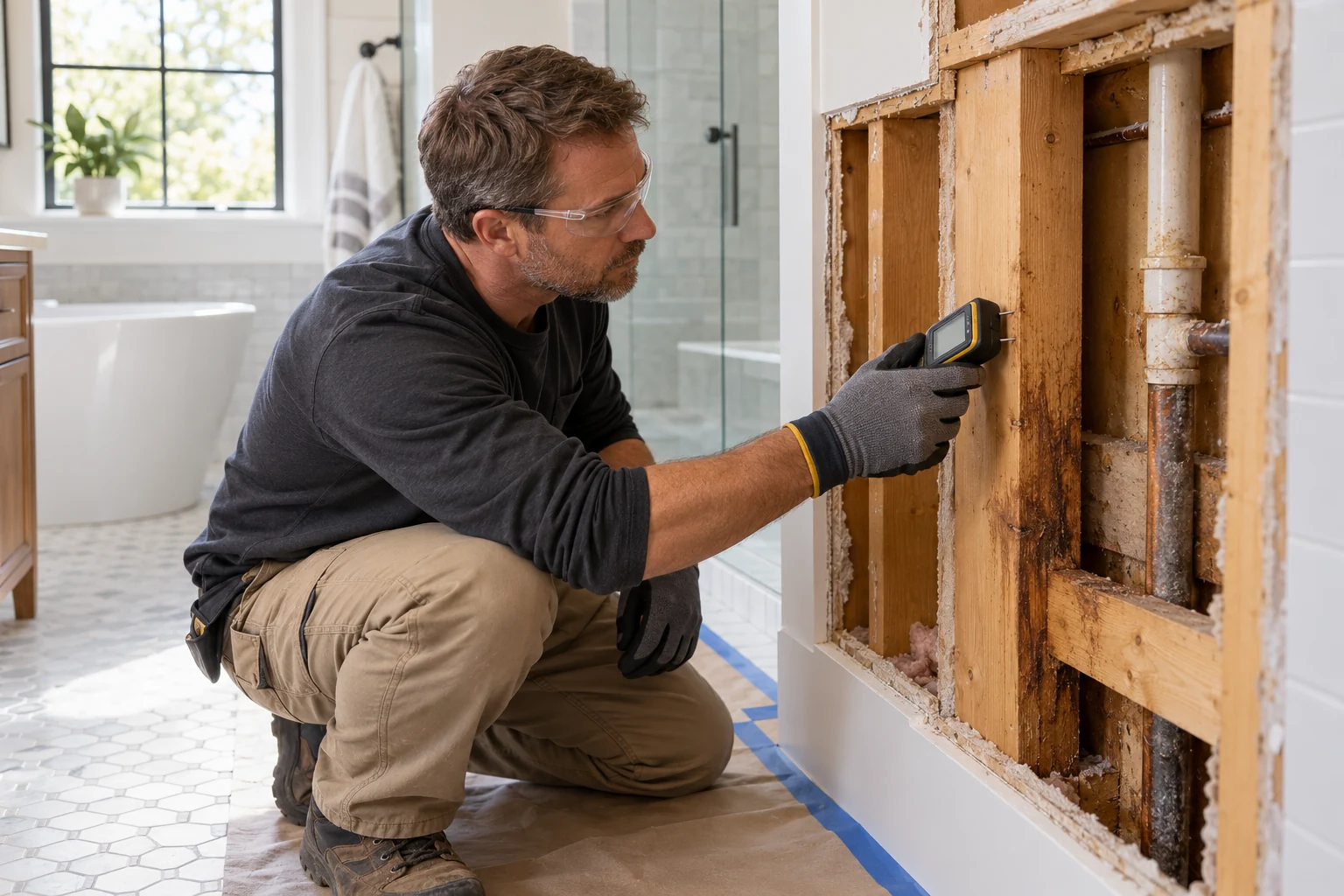
After a water-loss event, an owner needs a clear way forward as much as a repaired room. This illustrative client journey follows the stages of assessment, restoration planning, repairs, and handover. It shows the project habits an owner can look for when discussing restoration work: an organized scope, documented decisions, consistent updates, and a practical plan for returning the space to everyday use.
The first priority: understand the condition and the next step
In this example, an owner discovers water affecting a finished living area. The visible damage raises immediate questions: what caused it, which materials are affected, and whom should the owner contact? The starting point is appropriate professional assessment and attention to the source, rather than choosing replacement paint or flooring immediately.
A clear initial update explains what has been observed and what remains unknown. Photos and written notes provide context for the proposed next steps. Where other professionals are needed, identify their role so the owner understands which questions the construction team can answer and which require additional assessment.
The owner also needs a practical contact arrangement. Establish who will provide updates and who has authority to approve work. If a property manager is coordinating access or communicating with residents, include those responsibilities in the plan. Early clarity makes later decisions easier to follow and reduces conflicting instructions.
Turn the assessment into a coordinated restoration scope
Once the condition is better understood, the project can be organized into defined stages. In this scenario, those stages include addressing the source, carrying out the appropriate restoration work, confirming readiness for reconstruction, and completing the agreed repairs. The actual sequence should follow the findings and the requirements of the specific property.
Explain the difference between what is confirmed and what is provisional. An affected area may need further investigation before the full repair scope can be finalized. Owners should see those open questions in writing, along with the proposed way to resolve them, rather than discovering assumptions inside a later invoice.
The U.S. Environmental Protection Agency's moisture guidance reinforces the importance of dealing with moisture problems. For an owner, the practical question is how the responsible professionals will document the condition and the next stage. A new finish should follow the necessary assessment and repair decisions, rather than act as evidence that the underlying problem is resolved.
- Record the observed damage and the assessment still required.
- Identify the professionals responsible for each stage.
- Confirm the repair scope and any changes with the owner.
- Agree on the checks and documentation needed before finishing work.
Keep the owner informed as repairs move forward
During reconstruction, useful updates connect visible progress to the plan. Explain what has been completed, what comes next, and whether any owner decisions remain open. An update should also identify a dependency that could affect timing, such as an outstanding material selection or a required inspection.
If a new condition changes the work, present the proposed response with its cost and schedule implications. Obtain the appropriate authorization and keep the record with the project information. That process gives the owner a clearer view of what they have approved and helps the team coordinate the revised sequence.
An early target date should be reviewed as the scope and dependencies become clearer. In this illustrative journey, a useful schedule links the remaining activities to the decisions and checks they require. When timing changes, the owner receives an explanation and a revised plan, helping them coordinate access and prepare for the next stage.
Finish with a documented handover
Before closing a project, walk through the agreed scope with the owner and record any remaining items. Review relevant product information, care instructions, and available handover documents. A clear closeout helps the owner understand what was completed and how outstanding questions will be handled after the final walkthrough.
The handover should connect the completed work to the scope the owner approved. Walk through the repaired areas, discuss any remaining questions, and identify the contact for follow-up. Keeping the final information together gives the owner a useful reference for future maintenance and makes the transition back to everyday use easier to manage.
For an owner facing water damage now, this example offers a set of questions to bring to an initial conversation. Ask about assessment, coordination, approvals, updates, and closeout. PartnersProBuild welcomes project inquiries that begin with those practical concerns, even when the full scope is still being established.
Your starting point
A clear restoration journey brings the assessment, repair plan, owner decisions, and final handover together. Ask how those stages will be coordinated and documented for your property. If you've worked with our team, we'd love to hear about your experience.